Centaur ELT: Building a Galaxy When You Can't Code
The first episode of Centaur ELT. How Maggie Appleton's digital garden became a digital universe, why not knowing Three.js didn't stop me, and what art direction looks like when the AI writes the code.
Maggie Appleton’s digital garden concept captures something real about how ideas grow: not linearly, not in finished pieces, but in clusters that take shape over time. What I wanted for this site was something closer to a universe. Articles as constellations. Related ideas orbit each other, accumulate, and when a constellation is ready, it collapses into a long-form piece. The structure mirrors how thinking actually works, which is messier and more spatial than a standard blog roll ever suggests.
The old site wasn’t bad. It was serviceable. It just didn’t bring any of that to life. The reason was pretty simple: I have a lot of ideas, but I can’t code. Pre-made templates got me so far, and no further. You can feel that ceiling if you’ve spent any time inside a theme editor, clicking through options that are close to what you want but not quite it.
So I made a project of it. The question was whether I could use AI to close the gap between the vision I had in my head and something I’d actually want to live on the web.
The answer, for the homepage at least, was yes. It’s now an interactive galaxy built with Three.js. (I don’t even know what that stands for. Is it JavaScript? Maybe, who knows? I don’t care.) The point is that not knowing the library didn’t stop me. I described what I wanted; Claude Code built it.
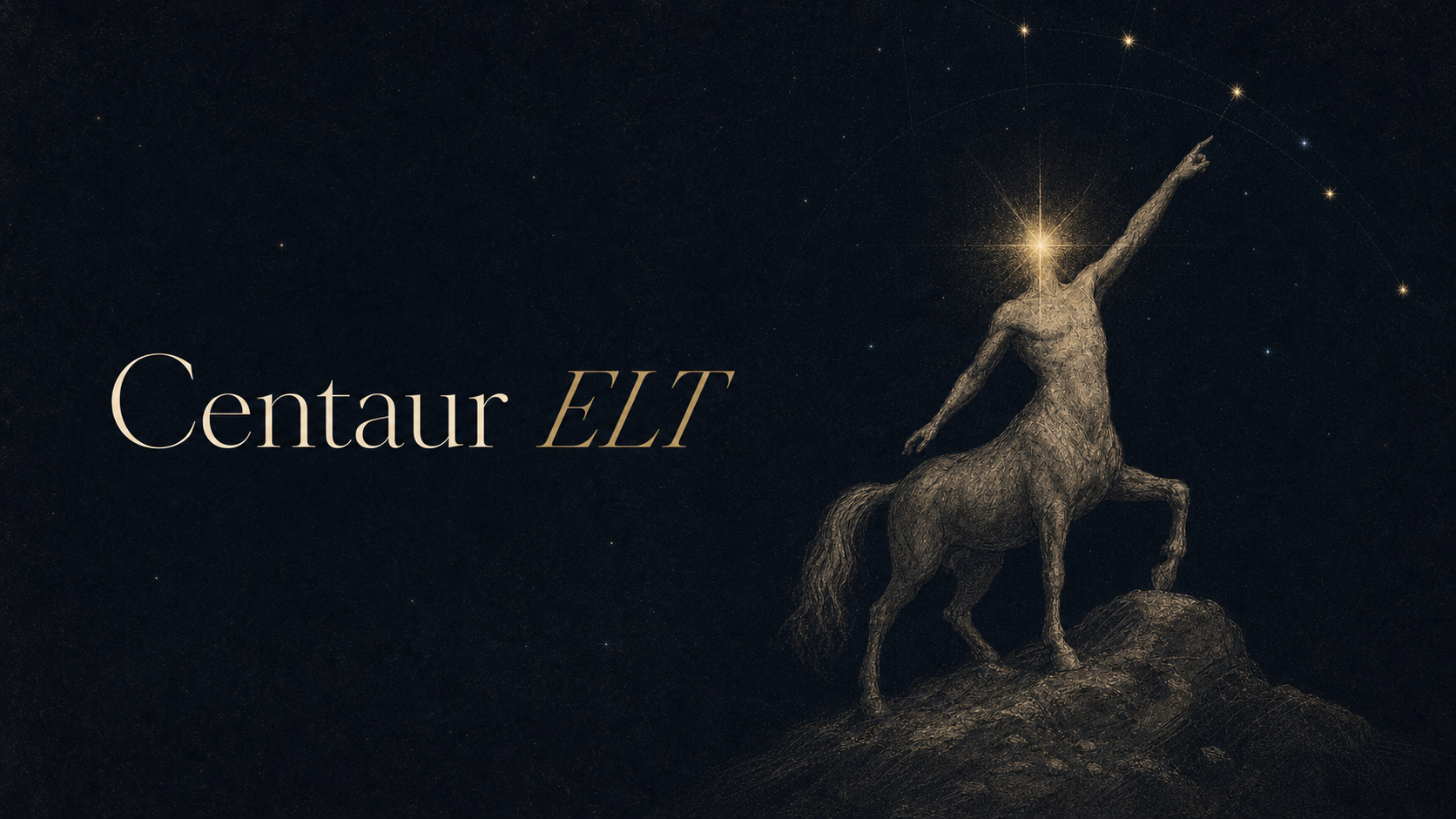
That’s the centaur framing that gives this series its name. Ivan Zhao, who created Notion, said something in a hiring context that stuck with me: capability is no longer a factor when hiring; he looks at taste and agency. I’d add vision, but I suspect Zhao would say taste already includes it. Either way, that’s the split here. I’m the art director. I had the vision and the judgment about what fit. The agent had the technical capability. Neither of us finishes the job alone.
The process wasn’t one-shot. The starting prompt was fairly simple, and what came back was a starting point. From there it was iteration: accept what fits, reject what doesn’t, describe what’s missing, run it again. Repeat. This felt like taste in action. You look at something, you know it isn’t right yet, and you keep going until it is.
Teachers have this skill already. Knowing a lesson isn’t landing while it’s still happening, and adjusting on the spot, is exactly the same loop. Reject what doesn’t work, accept what does, build toward the thing you were aiming for. The context is different; the muscle is the same.
The practical takeaway from this first episode: describe your vision in a prompt, run multiple iterations, and treat the rejection of what doesn’t fit as the work itself, not as failure.
Episode 1 of Centaur ELT is embedded above. It’s a diary, not a fixed run, so more episodes will follow as the work does. Subscribe to the YouTube channel if you want them. And if you’d rather get this kind of thinking straight to your inbox, my newsletter disASTER is where it lives.
Same constellation