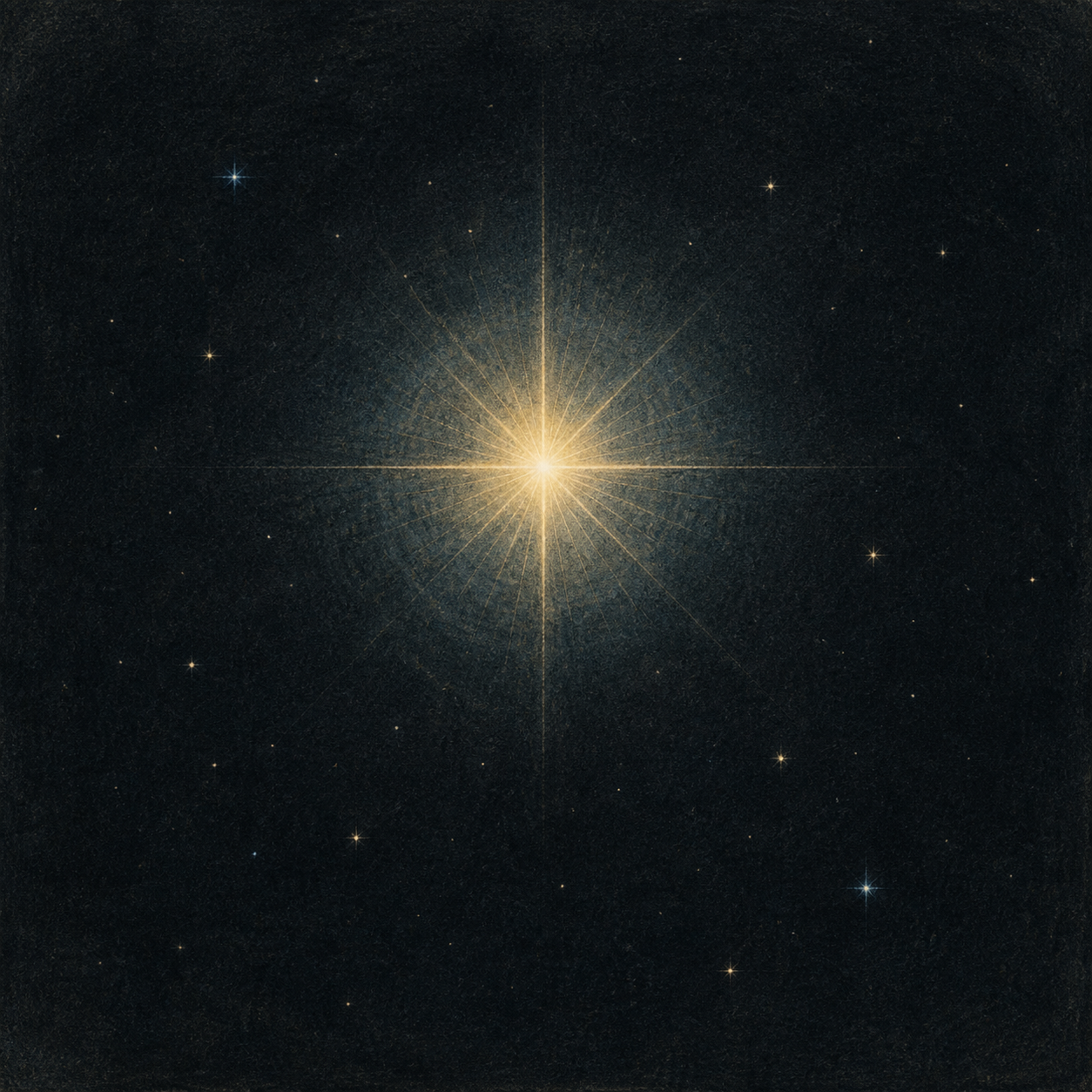
Centaur ELT: How a 19th-Century Astronomer Became My Art Director
Why my early AI graphics missed the mark, how a 19th-century astronomer became my art director, and the design brief that takes AI output from slop to signature.
I’ve been getting AI images wrong.
Not technically wrong. The images render fine. They’re just generic. That flat, slightly unreal sheen you’ve seen across a thousand LinkedIn posts and teacher slide decks. The particular shade of beige that signals someone typed a sentence and pressed enter. I was ordering images the way you’d order a takeaway: describe what you want, receive something edible, eat it without thinking.
The shift came when I found Étienne Léopold Trouvelot.
Trouvelot was a French astronomer working in the 1870s. He hand-painted the night sky — lunar craters, auroras, solar prominences — with a precision and warmth that photographs of the era couldn’t capture. His work sits somewhere between scientific record and fine art: dark indigo-black backgrounds, warm ivory details rendered in what feels like chalk or pastel, objects placed against generous negative space. I found him deliberately, by going back a step and researching artists who had spent their lives drawing the stars. I knew immediately that I wanted every image on this site to feel like it had been made in that room.
That wanting is the start of a design language.
The model’s default isn’t the slop. Publishing the default is.
What I did next mattered more than finding Trouvelot. I sat with his works — not as images to copy, but as masters to reason from. I wrote down what I saw. Dark indigo-black astronomical paper. Warm ivory serif. Muted antique gold. Fine-grain, sparse stars. Generous negative space. Then I asked an AI to take that raw observation and shape it into a reusable design brief, something precise enough to direct every image I made rather than describing each one from scratch.
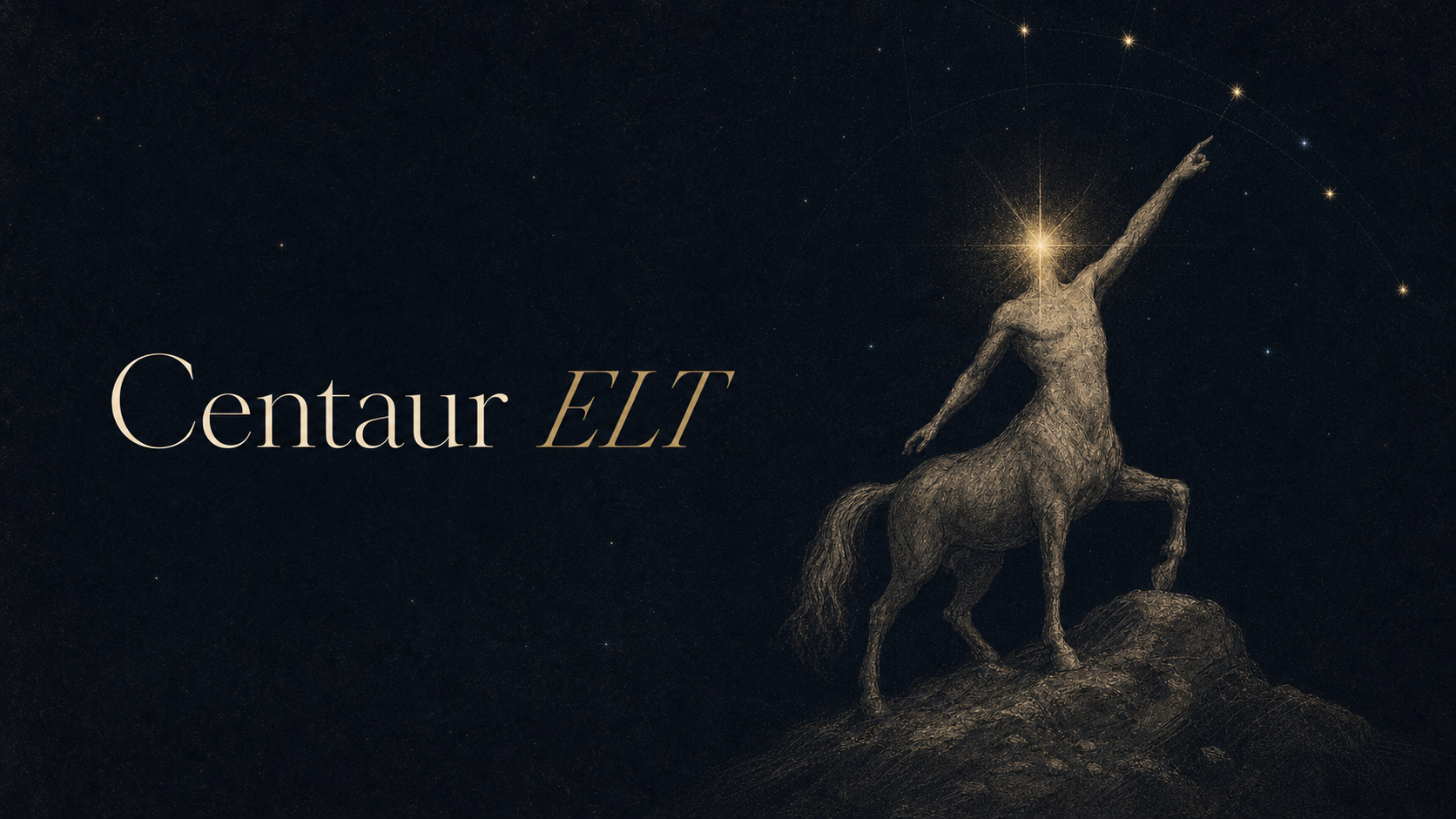
That brief became the system. The centaur title artwork came from it. So did every other visual in this universe. None of them show Trouvelot’s actual work — I’m not reproducing him, I’m reasoning from him the way a student reasons from a master’s principles.
The difference between ordering and directing is intentionality. Ordering says, “Here is a thing I want, give me a thing.” Directing says, “Here is a visual world with specific rules, make me something that lives inside it.” One produces variety. The other produces a body of work.
Teachers know this already.
We switch register constantly. We write learning objectives in one mode, feedback comments in another, parent letters in a third. Every one of those carries an implicit house style — a consistency we enforce without writing it down. We’ve built this muscle over years. We just haven’t applied it to our visual output.
Bringing your written instincts to image production doesn’t require design training. It requires the same thing good feedback does: precision. What’s the dominant colour? What’s the emotional weight of the composition? What do you never want to see? Write those answers down. Ask an AI to turn them into a brief. Then give the AI the brief, not the wish.
Trouvelot never touched a computer. But he understood that consistent visual language isn’t about style for its own sake. It’s about being recognisable. It’s about giving your audience a world they can trust.
You already know how to hold a consistent voice. Now hold a consistent eye.
The episode is embedded above. Centaur ELT is a diary, not a fixed run — subscribe to the YouTube channel if you want to follow along. And if you want the written companion to this kind of thinking, my newsletter disASTER is where it lives.
Same constellation