Centaur ELT: Let AI Find the Pattern. Let the Teacher Decide What Matters.
A world-class mathematician knew how to question and check AI. Centaur ELT applies that split to teaching: I bring context and judgement; AI analyses a lesson. I check its findings and turn them into a practice drill.

In July this year, a counterexample appeared to a maths problem that had been open since 1939: the Jacobian conjecture. I don’t understand it, and you don’t need to. Two things matter here. An AI model found the construction. Terence Tao, one of the world’s leading mathematicians, then sat down to work out what it meant.
He wrote it up on his blog and disclosed his use of AI in a single sentence at the end. He “used an AI chatbot to discuss various aspects of this problem and to confirm several of the calculations” (Tao, 2026a). He also linked his conversation with the LLM, so anyone can read it.
When you read it, you notice how he interrogates AI. The questions are short, packed with the language of the field, and in an order that only makes sense if you already know where you’re going. Give a curious non-mathematician the same tool and the same PDF and you would not get that conversation. You’d get a very polite explanation of what a Jacobian is.
Tao has a useful rule of thumb when conversing with AI:
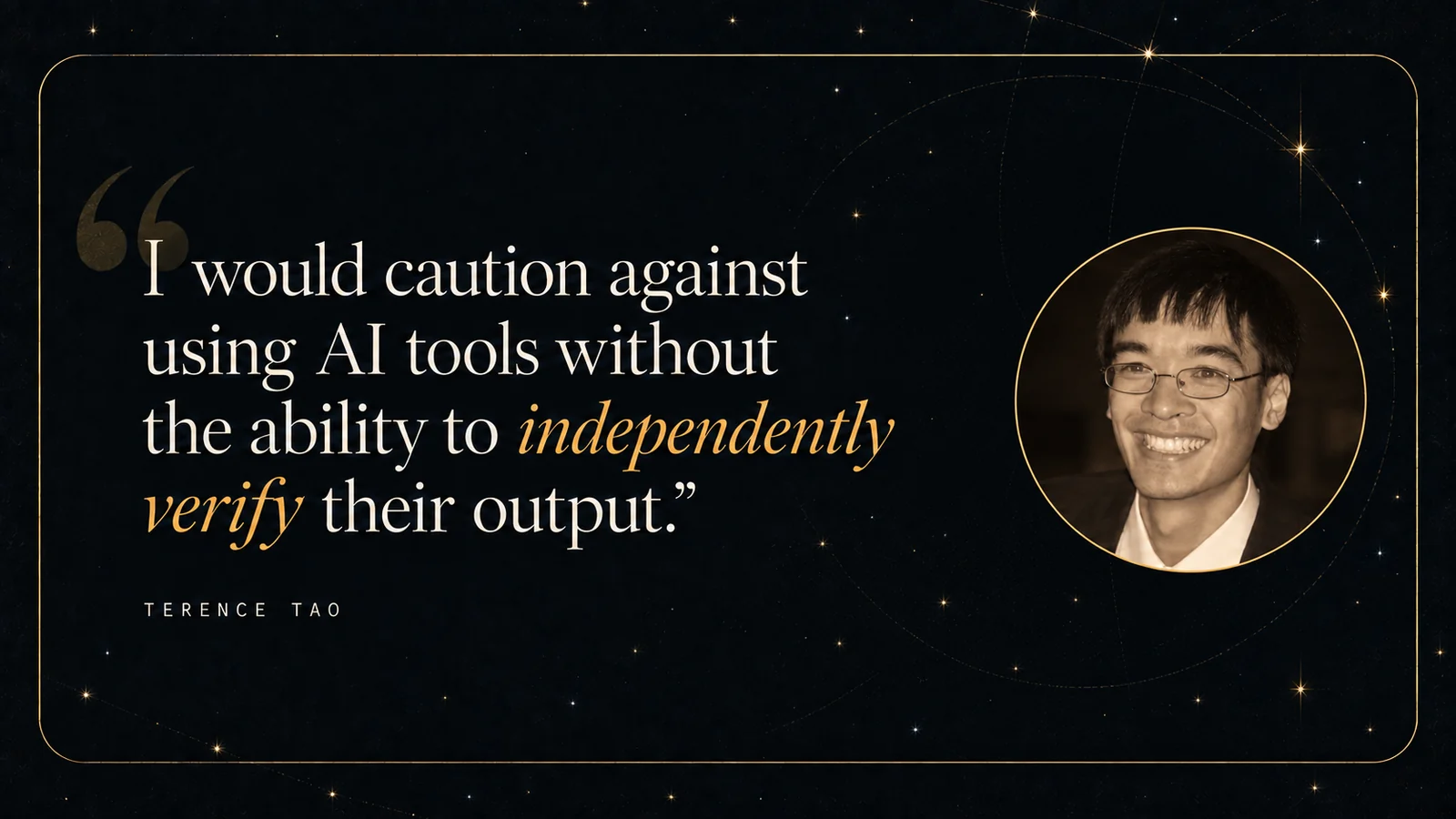

Hold on to that, because most of what I read about AI in language teaching is a different argument. It’s about slop. Generated images, generated worksheets, whether it’s cheating to have a chatbot tidy your paragraph. That’s a debate about single outputs. You ask, it answers, you judge the answer, you post about it.
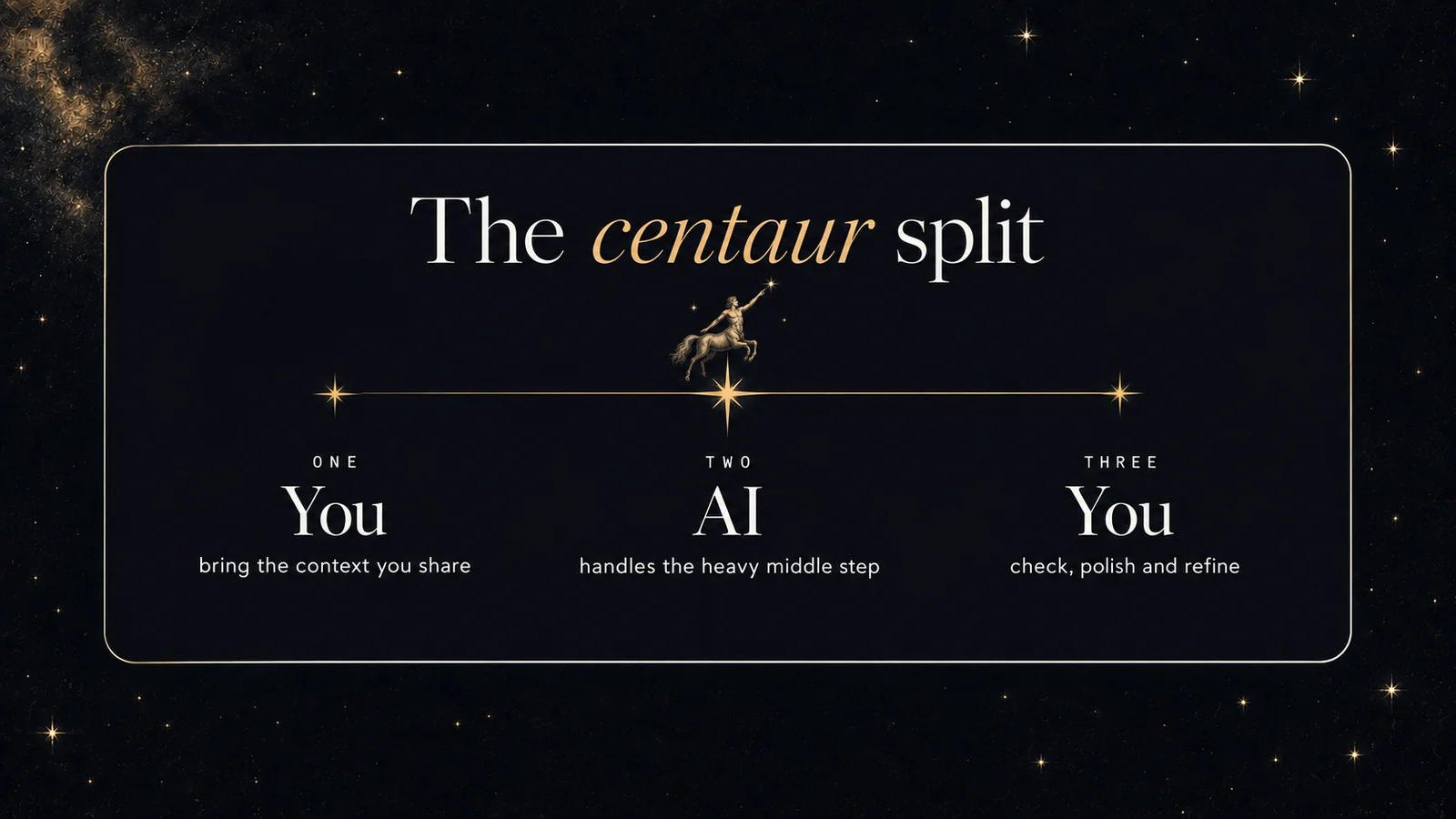
What Tao did is a different kind of use. He didn’t ask the AI for an answer. He gave it his own material, asked it precise questions, and checked what came back. That’s the kind of use teachers should study, and this lesson observation shows it from start to finish. It has three beats. You bring the context: the goal, the history, what you know about the teacher. AI handles the heavy middle step. Then you use your expertise to check, polish and refine the result. The case becomes a five-step method you can use with the chatbot you already have.
What I mean by centaur
I named this series after Ethan Mollick’s distinction between centaurs and cyborgs (2023), which I explored in AI: The State of Play in Language Teaching. A centaur keeps a clear line between person and machine. The human handles the work they’re strongest at and gives AI the tasks it does best.
I still lean centaur when working with AI. Tao’s three prompts show that division of labour clearly. The observation below has the same shape, just with a Very Hungry Caterpillar in it.
Why observations
My observations were already good. The teacher got honest feedback, a SMART goal and a few tips to work on. But I knew they could be a lot better.
Everyone in teaching knows time is the most precious thing you have. In an ideal world, every observation would include the deeper analysis. Interaction maps, so you could see how often each child speaks. Are they giving single words, or pushing it out to full sentences? Patterns in the teacher’s own language. Then we’d talk it through together, build a structured plan for the skill, and practise it with drills. That’s the follow-up that creates lasting change.
It all starts with a transcript, and making one by hand takes hours. On one or two observations I did go that far, but it was too time-intensive to do every time. So most of the time the deeper analysis didn’t happen, and the practice materials never got made.
That’s the gap. Not bad observations. Good ones that could be way better if the time constraint came off. That’s what a centaur relationship changes.
How an observation works here
I run Trat English Community remotely from Australia. There are cameras in the classrooms, so an observation starts with me downloading a recording. Each teacher gets four observations a year. For the first two I watch the whole video myself, then have the AI run a pass over it to build out my responses. The third and fourth are different. They’re teacher-led: the teacher watches their own video, finds the evidence that they’ve moved towards the goal we set last time, and flags the spots they want my eyes on. They’re leading the debrief, not me.
The teacher has been with us about ten months, teaching three-to-five-year-olds. I know her background and what her lessons looked like in May. And because the school runs on Notion, the AI could read what I know. Before it looked at a minute of video it had read her SMART goal, my written feedback from the previous observation, her lesson plan and our observation process page. Her own notes on this lesson, her timestamped evidence and the moments she wanted feedback on, came three days later, once she’d written them.
That context is the part people skip. Without her goal and my last feedback, the patterns the AI found would have been true and useless. “Teacher talk is high.” “Praise is generic.” Timestamps attached. Every kindergarten teacher on earth could receive that report. With the context, every pattern was measured against her goal, and the feedback was about this teacher, this lesson and the next thing she should do.
None of that needed a clever prompt. It needed the records to exist somewhere structured, in the same shape every time, where an AI could read them. Ours live in Notion.
Then it watched the video.
What the AI did
A word on the tool, because it isn’t the chatbot in your browser. I use Claude Code, an agent that runs on my own computer. Give it a goal and it opens files, runs programs, reads our Notion workspace through a connector, hits a wall, tries something else, and comes back with a pack of things. You type into it much as you would a chat, but it does work on your machine, not just in the reply.
So I dropped the camera file into a folder on my computer and typed three requests. Can you improve the audio. Can you transcribe it. Look for patterns. I added where the template, the lesson plan and her previous observation were in Notion, and asked it to match whatever feedback it gave to her SMART goal.
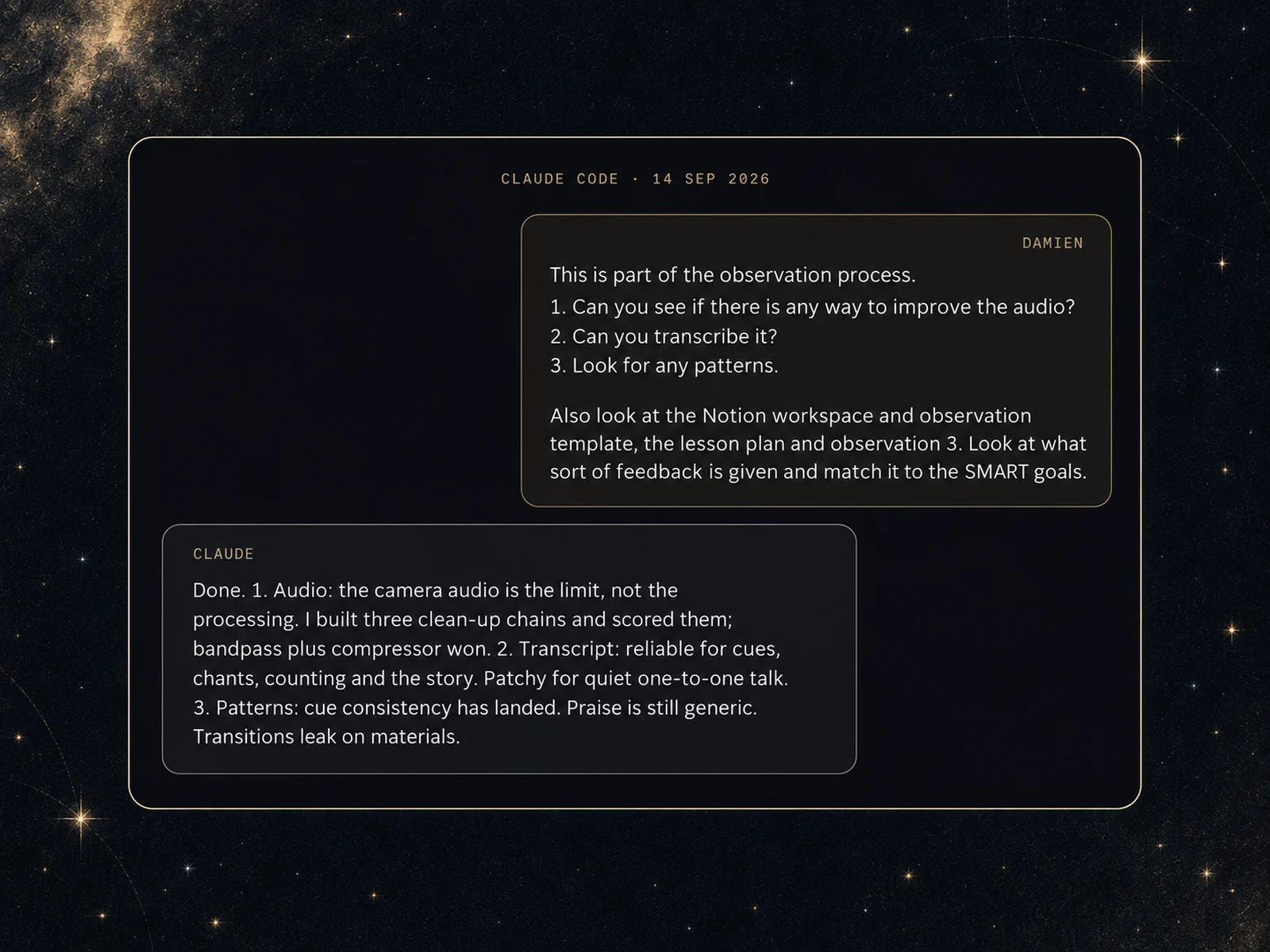
The audio. Classroom cameras record sound at telephone quality. Loud air conditioner, teacher on the far side of the room from the microphone. The first transcription attempt heard almost nothing. So the agent tried three different ways of cleaning the sound, transcribed the same six samples with each, and picked the one the transcription model was most confident about. The heaviest noise reduction scored worst, which I wouldn’t have guessed. Then it ran the full hour on my machine in about eight and a half minutes.
The honest result: a transcript that’s reliable for instructions, chants, counting and the story, and patchy for quiet one-to-one talk. Every doubtful line is tagged.
The eyes. Because the sound was weak, it pulled one frame per minute from the video and read them as contact sheets, then went back over each transition at ten-second intervals. That gave me a minute-by-minute timeline, and it found things no transcript could. The lesson plan was on the board with a picture for each stage, which I’d asked for two observations ago. The children were up and moving inside four minutes, which she’d promised in her last reflection.
The patterns, against her goal. Her goal from May was instruction language. One verb, one gesture, no fillers, pause and wait. Back then it took her fifteen to fifty seconds to reach the verb, buried under “okay, let’s, please, I want you to”.
This is the transition the AI picked out as the model, lightly cleaned from the transcript:
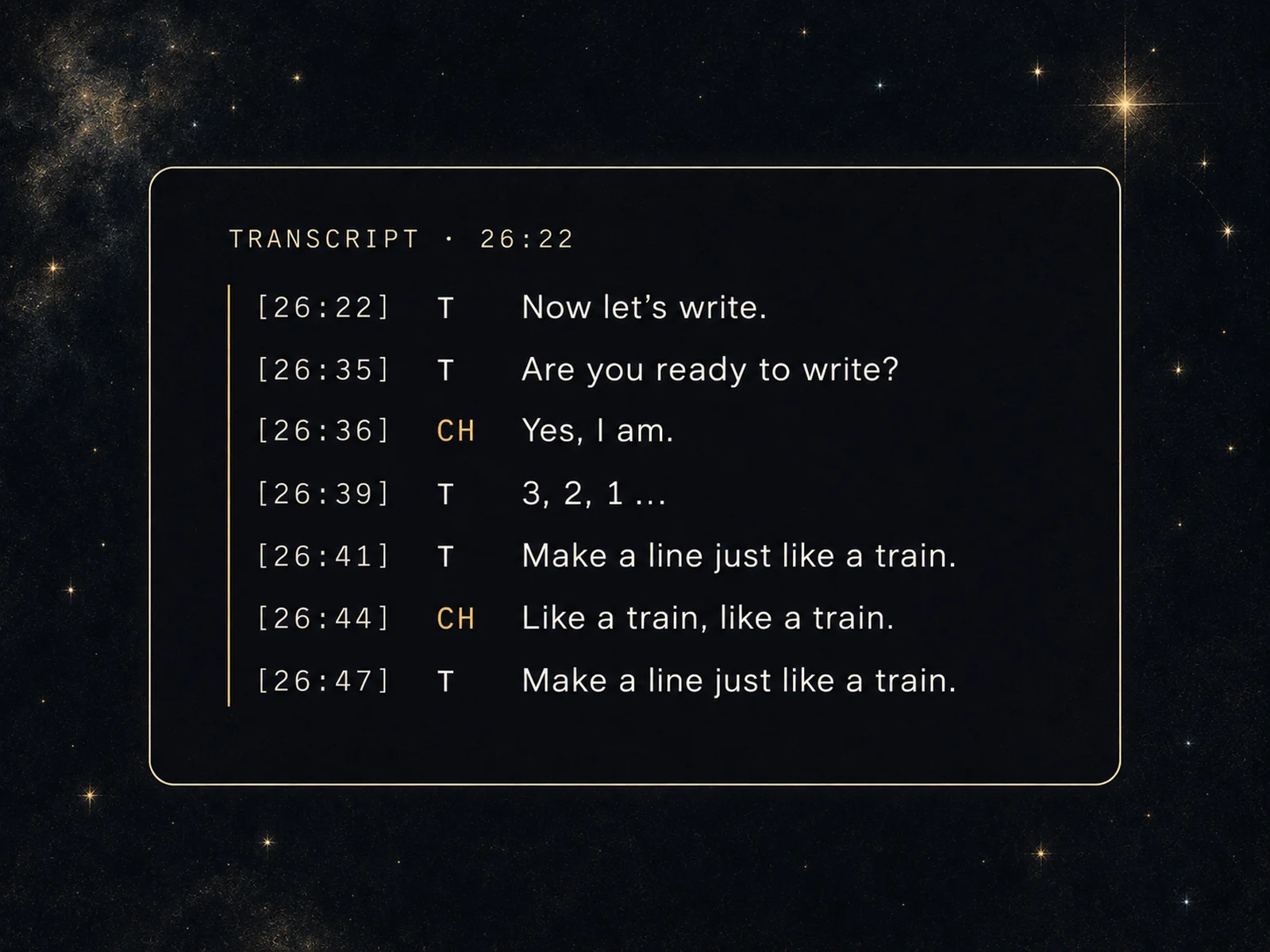
Name the activity, ready check, countdown, chant. Under thirty seconds from cue to line. The same chant ran six times in the lesson, word for word, and by the goodbye song the children were answering the ready check before she’d finished asking it. The goal had mostly landed.
Praise hadn’t moved. “Wow” about thirty times, plus a run of “good job”, “nice” and “perfect”. Nothing like “good sitting” or “good waiting” is audible anywhere, though the camera would have missed a quiet one-to-one label. Treat the numbers as close rather than exact; they’re machine counts from a patchy transcript, and I said so to her.
When her own notes arrived, they lined up with it. One of the moments she’d flagged as her best was the same transition the agent had picked as the model, three days before it could read her flags. That’s a good sign for both of them.
Where the expertise came in
It would be easy to read that and think the machine did the observation. It didn’t.
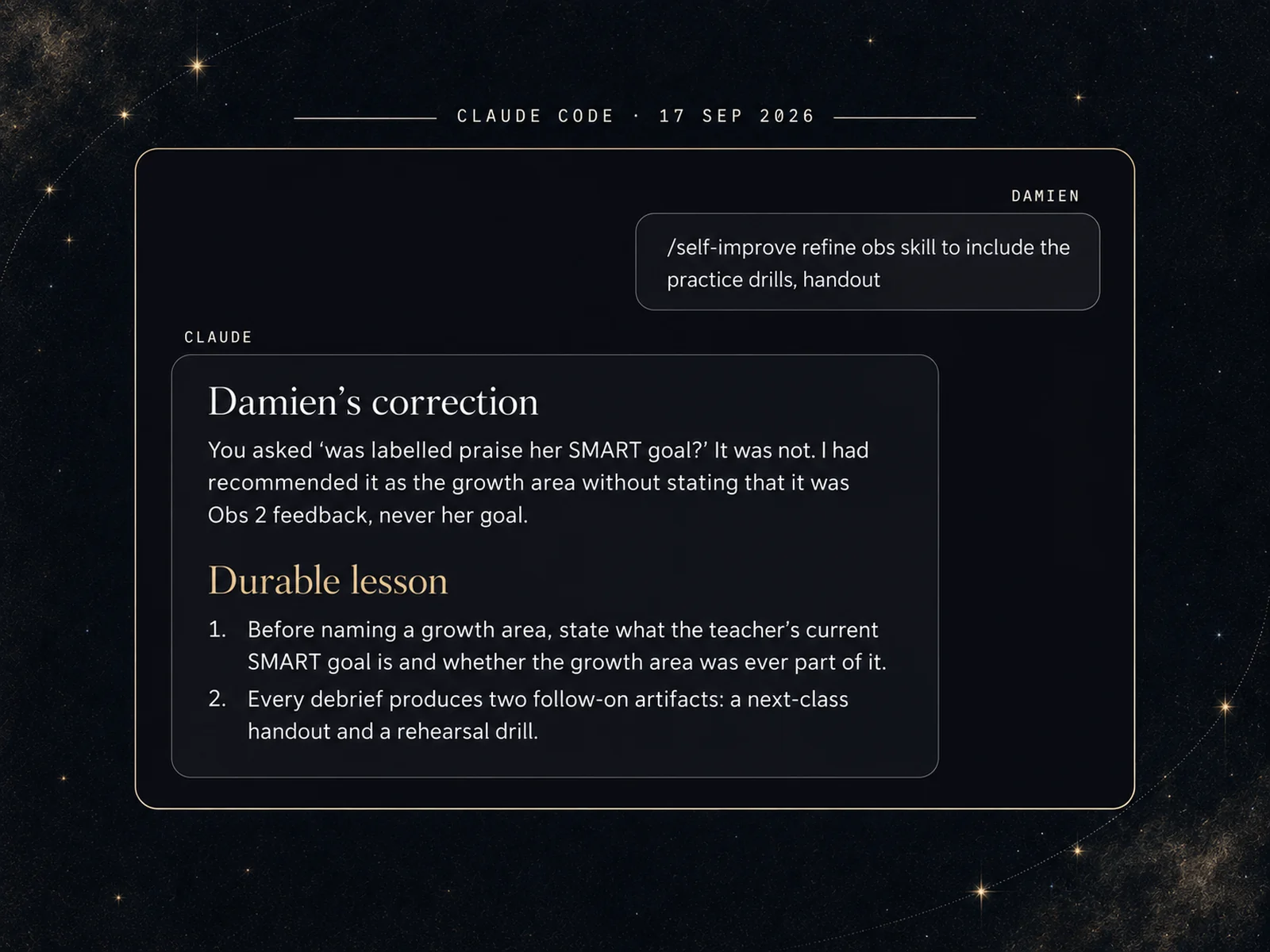
The SMART-goal catch. The agent recommended labelled praise as her growth area and wrote it up as something still open from last time. I asked a plain question.
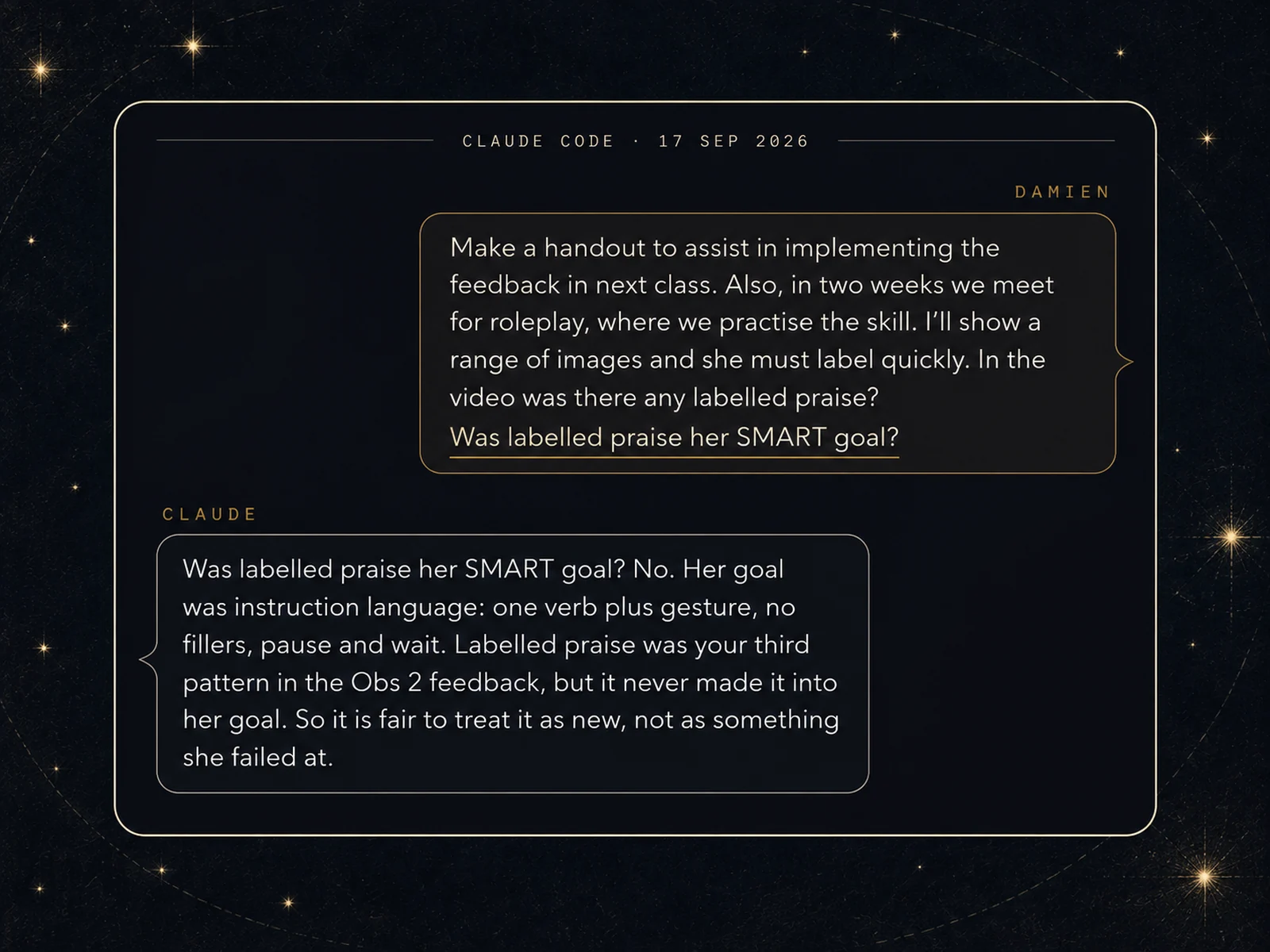
One question changed the whole feedback conversation. “You still haven’t done this” and “you nailed your goal, here’s the next one” lead to two different meetings. The handout now says it plainly in its second paragraph, and the check is written into the workflow so I shouldn’t have to ask again.
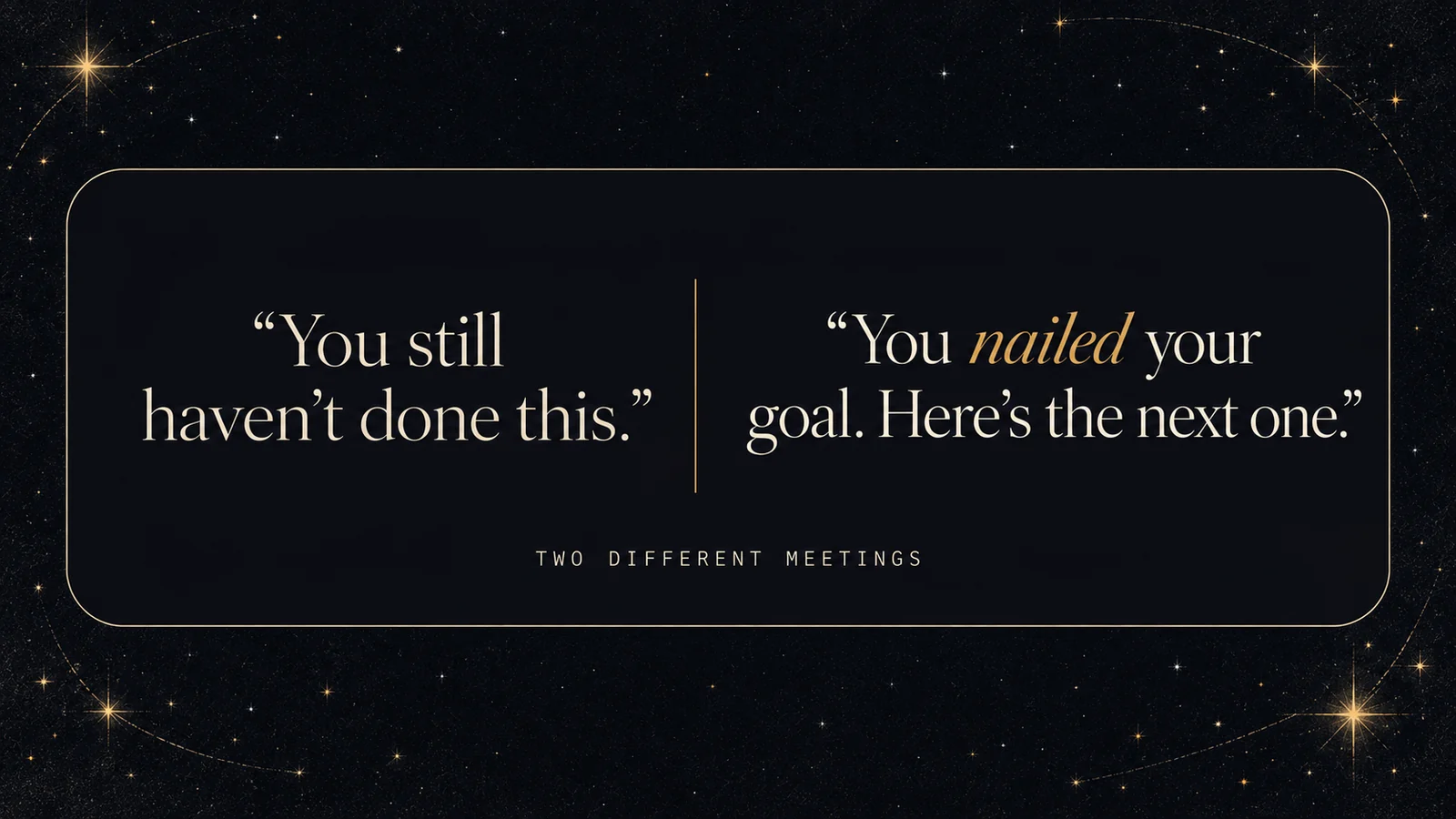
This is the Tao move at my scale. The agent had her goal in front of it and still framed the new thing as a failure.
The drill was my idea. In our process, the feedback meeting is followed two weeks later by a rehearsal, where the teacher practises the move rather than talks about it. My message was one line: I’ll show a range of images and she has to label the behaviour quickly. The agent built it as a click-through deck from stills of her own lesson, in three rounds. Slow, one behaviour at a time. Then a mixed room, where she has to find the child doing it right. Then a speed round.
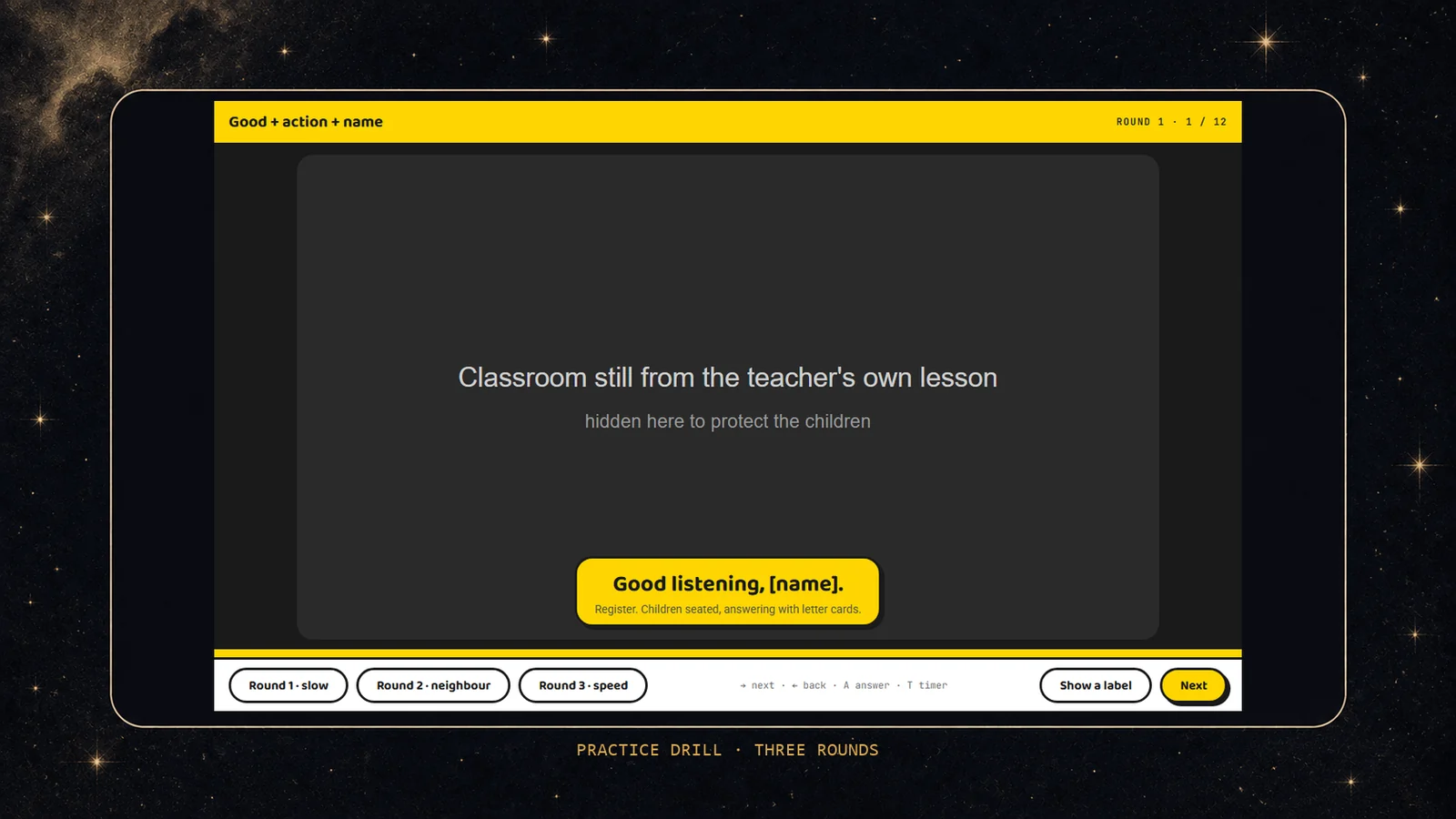
I think this comes from Practice Perfect (Lemov, Woolway & Yezzi, 2012): drill the skill until it’s automatic, so it survives contact with a real room. It’s a good way to embed these small teacher moves. And it’s not there yet. Some of the classroom stills are ambiguous, so before the follow-up I’ll generate clearer images and rework what each one is meant to show.
But this is the point. I wouldn’t have had the time to create something like that myself. It did the heavy middle step, and that’s the time-intensive one.
The prep notes. I have a standing instruction that debrief prep follows two bodies of work: David Yeager’s wise feedback, where you state a high standard and your belief the person can reach it; and Stone and Heen’s advice to separate appreciation, coaching and evaluation, then narrow everything to one thing. The AI produced a one-page plan, coaching questions, likely sticky moments, and an offer to play the teacher so I could rehearse.
This was the least useful thing it made. Not unusable. If I knew a conversation was going to be hard, I’d practise it. This one wasn’t, so I didn’t, and that’s worth knowing before you build one.
What came out the other end
After the first session and a short one a few days later, this existed:
- a cleaned, timestamped transcript and a listenable version of the audio
- the visual timeline, with every transition timed
- an evidence table of eleven moments mapped to her goal
- the debrief plan
- a three-page handout to help with labelling behaviour in the classroom
- the practice drill for the rehearsal
The handout is built from her own lesson. One move, written as a formula. A table of real moments: what the children did, what she said, what to say instead. A technique for the very active child she’d asked about. Three planned moments tied to routines she already runs, because “do it all the time” isn’t a plan.
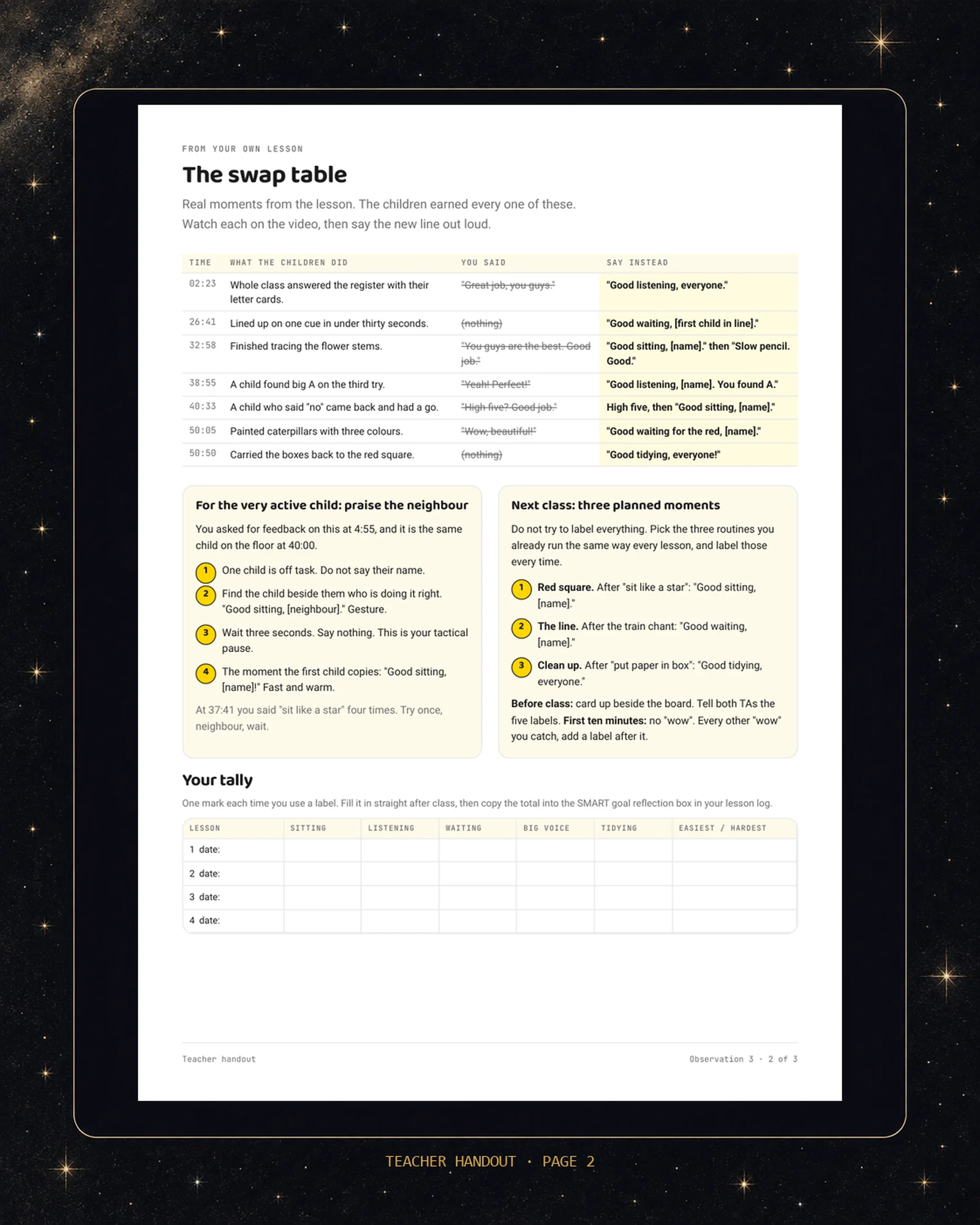
The feedback meeting went well. She led it, she’d found her own evidence, and we set her next SMART goal: labelled praise, a behaviour and a name, inside two seconds. The rehearsal in two weeks is where it starts to stick. What I can say now is that the things that used to get dropped exist, and they’re on the table.
If you want to try this
You don’t need my setup. You need the pattern. Five steps, in the order you’d do them.
- Build the context layer first. Before the agent sees a minute of video, it should be able to read the teacher’s goal, your last feedback, the lesson plan and their own reflections. Ours live in Notion. A folder of documents you can upload will do to start. Without that layer you get generic advice with timestamps.
- Make the AI check itself against the goal. AI will happily flag problems the teacher was never asked to fix. Tell it to name the teacher’s current goal first, then say whether each point it raises is part of that goal or something new.
- Use the counts as evidence, not verdicts. They’re machine counts from an imperfect transcript, and the quiet moments are the ones it misses. Say so to the teacher.
- Build the practice, not just the report. One thing, not nine. A handout from the teacher’s own moments and a drill they can rehearse are worth more than a longer write-up.
- Write every correction back into the workflow. The goal check I asked for by hand is now in the instructions the agent reads next time. That’s the compounding part. Each observation should make the next one sharper.
Back to Tao
Tao didn’t get a better chatbot than the rest of us. He got a better conversation, because he brought the construction, the questions and the ability to tell a right answer from a wrong one. The model did the hours of checking he didn’t want to do by hand.
Swap the maths for a Young Learner class. I brought the goal from May, the process, ten months of knowing the teacher, the idea for the drill and one question about what her SMART goal actually was. The model did the hours: the audio, the transcript, the frames, the timeline, the first draft of everything. Then it handed back, and I did the part that needs someone who knows the room.
Tao’s summary page on AI, which is drafted by a model and checked by him, puts it in a line I’d happily have written myself: a machine first draft to verify and polish “beats a blank page” (Tao, 2026b).
That’s what AI is for a teacher, as far as I can tell. You bring the context. AI handles the heavy middle step, which takes a lot of effort. Then you use your expertise to check, polish and refine it. Tao could push the model further because he knows maths. You can push it further because you know teaching. So push.
Centaur ELT is a diary, not a scheduled series. Subscribe to the YouTube channel if you want the episodes, and my newsletter disASTER is where the thinking between episodes lives. If your school wants a context layer like the one above, that’s what I build through Language Layouts.
References
Herlihy, D. (2023, November 22). AI: The state of play in language teaching in 2024. damienherlihy.com. https://www.damienherlihy.com/post/ai-the-state-of-play-for-teachers
Keller, O.-H. (1939). Ganze Cremona-Transformationen. Monatshefte für Mathematik und Physik, 47, 299–306.
Lemov, D., Woolway, E., & Yezzi, K. (2012). Practice perfect: 42 rules for getting better at getting better. Jossey-Bass.
Mollick, E. (2023, September 16). Centaurs and cyborgs on the jagged frontier. One Useful Thing. https://www.oneusefulthing.org/p/centaurs-and-cyborgs-on-the-jagged
Stone, D., & Heen, S. (2014). Thanks for the feedback: The science and art of receiving feedback well. Viking.
Tao, T. (2026a, July 21). A digestion of the Jacobian conjecture counterexample. What’s New. https://terrytao.wordpress.com/2026/07/21/a-digestion-of-the-jacobian-conjecture-counterexample/
Tao, T. (2026b, September 17). Terence Tao on AI: A living summary (AI-drafted from public writing, reviewed and corrected by the author). https://teorth.github.io/tao-web/ai-views.html
Yeager, D. S. (2024). 10 to 25: The science of motivating young people. Avid Reader Press.
Same constellation